NYK Orders Next-Generation Marine DX Equipped Car Carrier| NYK Line
Aiming for Safer Operations and Labor Savings through Cutting-Edge Digital Technology
NYK is pleased to announce the order of a new car carrier outfitted with state-of-the-art digital marine DX technology.
This vessel will feature an advanced autonomous navigation system, a large-motion mitigation system, and a comprehensive onboard Wi-Fi network covering the entire vessel, all designed to enhance safety and streamline onboard operations. The vessel is scheduled for delivery in March 2026. Trials will be conducted during actual commercial voyages to verify the effectiveness of the new technology.
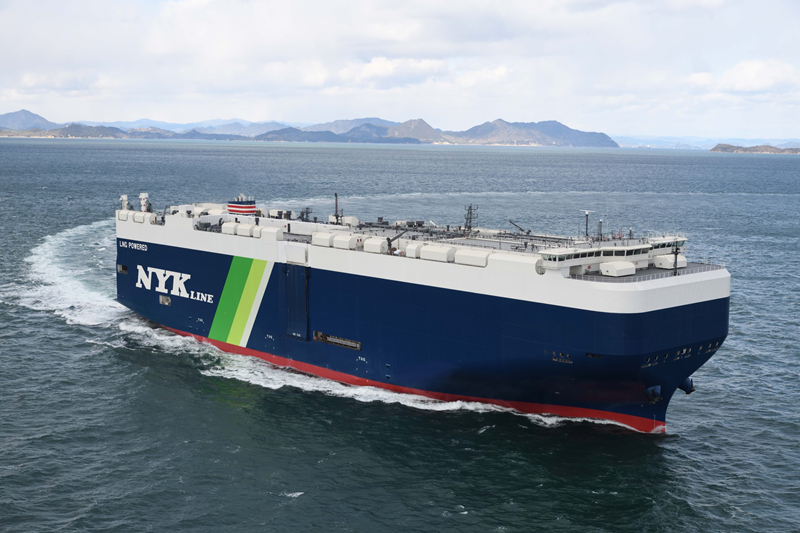
Image of DX equipped car carrier
Background
In recent years, the increasing size of vessels and rising traffic volumes have heightened the difficulty of ship handling. Additionally, the growing complexity of onboard equipment has increased the burden on crew members. Furthermore, nearly 70% of accidents during voyages are caused by human error. Preventing such errors and streamlining onboard operations are essential for achieving safe navigation.
Advanced DX for Safer Navigation
1. Autonomous Navigation System
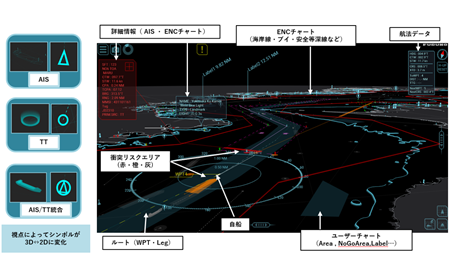
Autonomous Navigation System
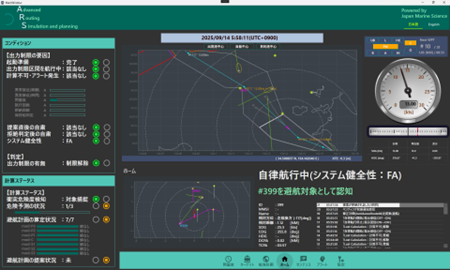
Operating under crew supervision, this system automatically avoids collisions and groundings to support safe navigation. By assisting with tasks traditionally performed manually by navigators during watchkeeping — such as information gathering, situation analysis, and collision avoidance planning — it aims to reduce navigator workload and enhance safety.
Developed under the Nippon Foundation’s Fully Autonomous Ship Program, MEGURI2040,* this system utilizes AI-powered image recognition and automatic radar target analysis to gather surrounding information, analyze the situation, visualize collision risks, formulate evasion plans, and perform automatic steering. It can also be switched to conventional crew-operated steering at any time.
2. Large Motion Mitigation System
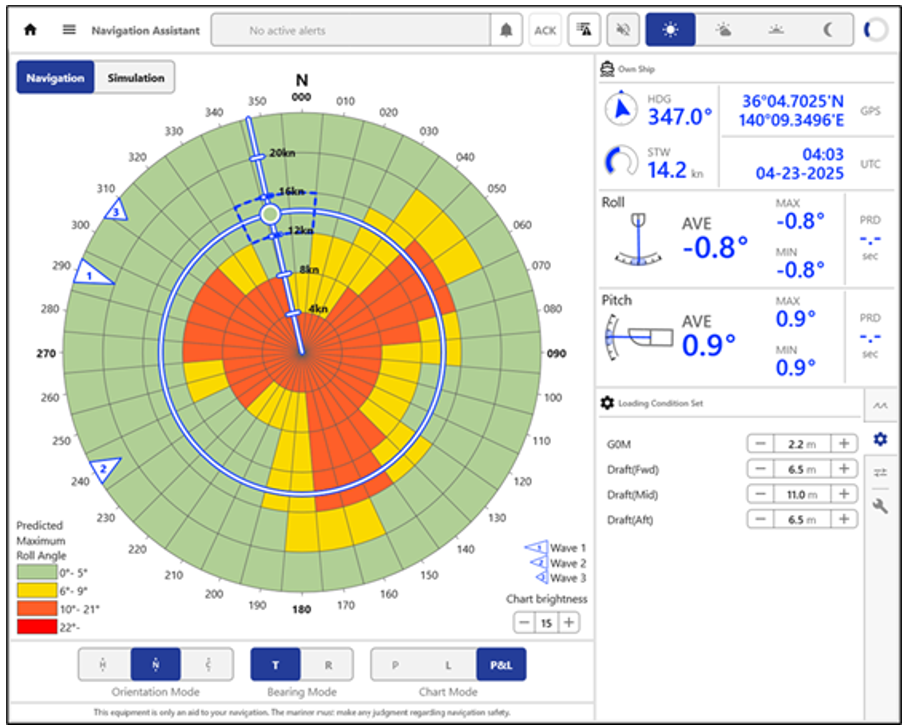
Large Motion Mitigation System
Ship behavior can vary significantly — even under identical sea conditions — depending on factors such as course and speed. To combat issues like severe rolling that may lead to cargo shifting, this innovative system simulates vessel motion using current ship conditions and real-time radar wave data. It then recommends the optimal course and speed to the operator to minimize rolling. This aims to prevent significant rolling, protect cargo, and enhance safety.
3. Wi-Fi Network Covering the Entire Ship
While advancements in satellite communication have improved ship-to-shore connectivity, communication within the ship itself remains limited to areas such as the bridge and living quarters. In critical locations such as engine rooms, decks, and cargo holds, accessing online manuals and documents, confirming trouble situations via real-time video, or communicating with shore-based medical facilities during medical emergencies can be difficult. Furthermore, the ship’s metal hull creates areas where transceivers used for onboard communication have poor reception, potentially hindering daily operations. To resolve these issues and enhance operational efficiency and safe navigation, this vessel will install Wi-Fi access points throughout the entire ship, significantly improving the onboard communication environment.
Vessel Overview
Vessel Type: Car carrier
Length Overall: 199.95 meters
Beam: 38.00 meters
Scheduled Delivery Date: March 31, 2026
Shipyard: Shinkai Toyohashi Shipbuilding Co., Ltd.
* This initiative is dedicated to advancing autonomous vessel technology to address societal challenges — such as labor shortages resulting from Japan’s declining and aging population, as well as maritime accidents caused by human error. This effort is part of a broader strategy to bolster Japan’s maritime industry and its related sectors, a project in which our group is proud to be involved.